
Freedom from nicotine. Built around the ritual.

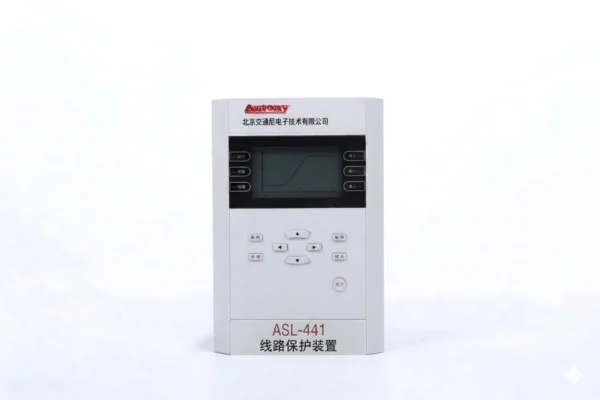
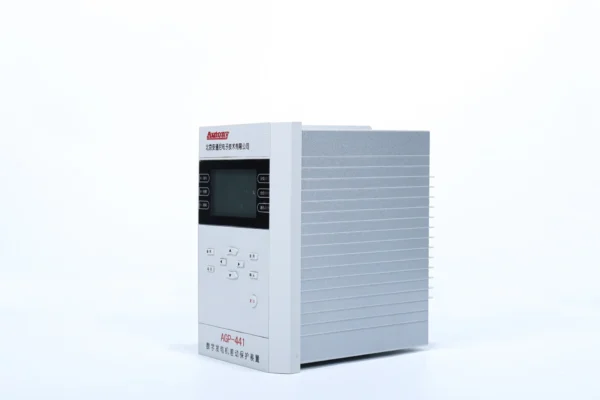
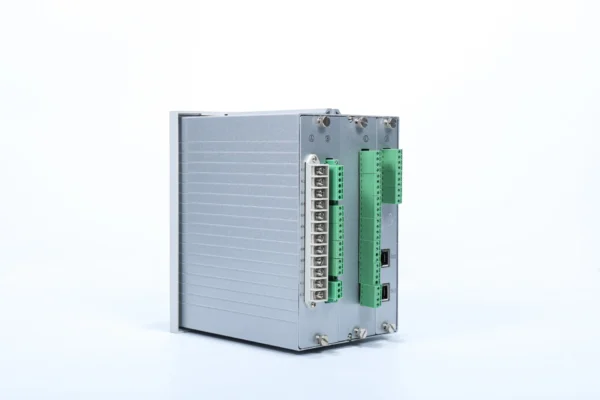
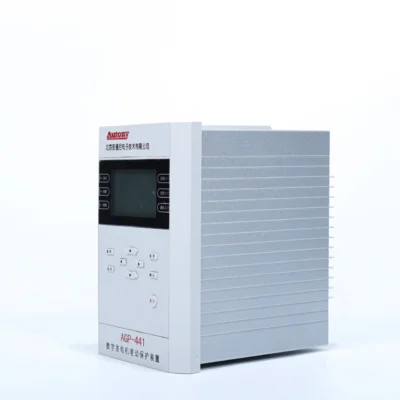
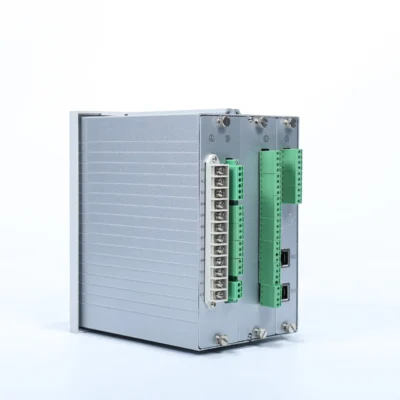
ASL-441H line protection relay
Overview
The ASL-441H Digital Line Protection and Monitoring Unit, as one of the professional transmission line protection relays and digital relays for transmission line protection, is a high-performance line protection relay suitable for low-current grounding systems with ungrounded neutral points or neutral points grounded via arc-suppression coils at voltage levels of 66 kV and below. It serves as bay-level equipment for line units.
Protection Functions and Corresponding ANSI Codes
27/ 50/ 51/ 67/ 25/ 79/ 46/81/ 50N/51N/ 59N/ 51I / 51NG/ 49/ 62/ 50HS / 60
Communication Mode:Optional: RS-485, CAN bus, Ethernet, IEC 60870-5-103 (IEC-103)
In-house Factory & Technical Team, OEM ODM Custom Electrical Equipment
Description
Overview
- The ASL-441H Digital Line Protection and Monitoring Unit, as one of the professional transmission line protection relays and digital relays for transmission line protection, is a high-performance line protection relay suitable for low-current grounding systems with ungrounded neutral points or neutral points grounded via arc-suppression coils at voltage levels of 66 kV and below. It serves as bay-level equipment for line units.
Protection Functions and Corresponding ANSI Codes
Three-stage Definite-time Overcurrent Protection
- Function Description: Includes instantaneous overcurrent trip, delayed instantaneous trip and regular overcurrent protection. All three stages support undervoltage blocking and directional blocking, with independent enable and disable functions.
- ANSI Code: 27, 50, 51, 67
Auto-reclosing Protection
- Function Description: Supports three-phase single-shot auto-reclosing, reclosing post-acceleration, reclosing synchronism check, dead-line voltage check and current blocking reclosing functions.
- ANSI Code: 25, 79
Under-frequency Load Shedding Protection
- Function Description: Equipped with slip blocking, undercurrent blocking and undervoltage blocking, which can be enabled or disabled independently. The output supports configurable trip (reclosing blocking) or alarm mode.
- ANSI Code: 27, 46, 81
Zero-sequence Overcurrent Protection
- Function Description: Supports configurable trip or alarm output.
- ANSI Code: 50N / 51N
Zero-sequence Overvoltage Protection
- Function Description: Supports configurable trip or alarm output.
- ANSI Code: 59N
Inverse-time Overcurrent Protection
- Function Description: Provides inverse-time overcurrent protection characteristic.
- ANSI Code: 51I
Small-current Grounding Line Selection Function
- Function Description: Realizes fault line selection for small-current grounding system.
- ANSI Code: 51NG
Overload Protection
- Function Description: Prevents equipment damage caused by continuous overload operation.
- ANSI Code: 49
Bus Charging Protection
- Function Description: Provides fast protection during busbar charging operation.
- ANSI Code: 62
Loss of Voltage Protection
- Function Description: Detects system undervoltage and loss of voltage fault.
- ANSI Code: 27
CT Disconnection Fault Detection
- Function Description: Monitors and identifies current transformer circuit disconnection fault.
- ANSI Code: 60
Manual Closing and Reclosing Post-acceleration Protection
- Function Description: Triggers accelerated tripping during manual closing and auto-reclosing operation.
- ANSI Code: 50HS
Control Circuit Disconnection Detection
- Function Description: Detects disconnection fault of device control circuit.
- ANSI Code: 74
PT Disconnection Fault Detection
- Function Description: Monitors and identifies voltage transformer circuit disconnection fault.
- ANSI Code: 60
Communication Mode
- Optional: RS-485, CAN bus, Ethernet, IEC 60870-5-103 (IEC-103)
Main Functional Specifications
- Protection response time (including the response time of the output relay): Average error in response time: not more than 35 ms;
- Precision operating range: Minimum precision current: 0.08 In, Maximum precision current: 20 In
- Current setting error: When the current exceeds 1.00 A, the error shall not exceed ±2.5%; Voltage setting error: shall not exceed ±3%
- Measurement accuracy: Current (I)/Voltage (U): Class 0.2; Power (P)/Reactive power (Q): Class 0.5
- Remote signal resolution: no more than 2 ms
Event Logging, Fault Recording
- The recorded events include protective action events and device malfunctions;
- Record the type of protection trip, the time of the trip, and the operating parameters at the time of the trip;
- The fault recording data includes: the time of the protection operation, the type of protection operation, and the rms values before and after the recording was initiated;
- Data length of the fault recording: 2 cycles before the fault and 4 cycles after the fault;
- The SOE can retain 48 sets of data after a power loss, and the fault report can retain 16 sets of data after a power loss.
Monitoring Features
- The device is capable of measuring analog quantities such as current, voltage, and frequency;
- Collect position signals from circuit breakers, energy storage systems, isolating switches, and remote/local control switches, as well as other digital signals;
- Control functions of the disconnect switch.
Setting Table
|
Parameter No.
|
Parameter Name
|
Range
|
Step
|
Remarks
|
|---|---|---|---|---|
|
1. Primary Stage Overcurrent Setting
|
–
|
–
|
–
|
–
|
|
1.1
|
Primary Stage Protection Enable/Disable
|
1 / 0
|
–
|
1: Enable primary stage protection; 0: Disable primary stage protection
|
|
1.2
|
Primary Stage Undervoltage Blocking Enable/Disable
|
1 / 0
|
–
|
1: Enable undervoltage blocking; 0: Disable undervoltage blocking. Correlates with general undervoltage blocking settings (Item 11)
|
|
1.3
|
Primary Stage Directional Blocking Enable/Disable
|
1 / 0
|
–
|
1: Enable directional blocking; 0: Disable directional blocking
|
|
1.4
|
Primary Stage Post-Acceleration Enable/Disable
|
1 / 0
|
–
|
1: Enable post-acceleration; 0: Disable post-acceleration. Correlates with post-acceleration time setting (Item 11)
|
|
1.5
|
Primary Stage Time Delay
|
0.10~120.00s
|
0.01s
|
–
|
|
1.6
|
Primary Stage Current Setting Value
|
0.40~99.99A (In=5A)0.10~20.00A (In=1A)
|
0.01A
|
Rated current adaption
|
|
2. Secondary Stage Overcurrent Setting
|
–
|
–
|
–
|
–
|
|
2.1
|
Secondary Stage Protection Enable/Disable
|
1 / 0
|
–
|
1: Enable secondary stage protection; 0: Disable secondary stage protection
|
|
2.2
|
Secondary Stage Undervoltage Blocking Enable/Disable
|
1 / 0
|
–
|
1: Enable undervoltage blocking; 0: Disable undervoltage blocking. Correlates with general undervoltage blocking settings (Item 11)
|
|
2.3
|
Secondary Stage Directional Blocking Enable/Disable
|
1 / 0
|
–
|
1: Enable directional blocking; 0: Disable directional blocking
|
|
2.4
|
Secondary Stage Post-Acceleration Enable/Disable
|
1 / 0
|
–
|
1: Enable post-acceleration; 0: Disable post-acceleration. Correlates with post-acceleration time setting (Item 11)
|
|
2.5
|
Secondary Stage Time Delay
|
0.10~120.00s
|
0.01s
|
–
|
|
2.6
|
Secondary Stage Current Setting Value
|
0.40~99.99A (In=5A)0.10~20.00A (In=1A)
|
0.01A
|
Rated current adaption
|
|
3. Tertiary Stage Overcurrent Setting
|
–
|
–
|
–
|
–
|
|
3.1
|
Tertiary Stage Protection Enable/Disable
|
1 / 0
|
–
|
1: Enable tertiary stage protection; 0: Disable tertiary stage protection
|
|
3.2
|
Tertiary Stage Undervoltage Blocking Enable/Disable
|
1 / 0
|
–
|
1: Enable undervoltage blocking; 0: Disable undervoltage blocking. Correlates with general undervoltage blocking settings (Item 11)
|
|
3.3
|
Tertiary Stage Directional Blocking Enable/Disable
|
1 / 0
|
–
|
1: Enable directional blocking; 0: Disable directional blocking
|
|
3.4
|
Tertiary Stage Post-Acceleration Enable/Disable
|
1 / 0
|
–
|
1: Enable post-acceleration; 0: Disable post-acceleration. Correlates with post-acceleration time setting (Item 11)
|
|
3.5
|
Tertiary Stage Time Delay
|
0.10~120.00s
|
0.01s
|
–
|
|
3.6
|
Tertiary Stage Current Setting Value
|
0.40~99.99A (In=5A)0.10~20.00A (In=1A)
|
0.01A
|
Rated current adaption
|
|
4. Zero-sequence Overcurrent Setting
|
–
|
–
|
–
|
–
|
|
4.1
|
Zero-sequence Primary Stage Protection Enable/Disable
|
1 / 0
|
–
|
1: Enable protection; 0: Disable protection
|
|
4.2
|
Zero-sequence Secondary Stage Protection Enable/Disable
|
1 / 0
|
–
|
1: Enable protection; 0: Disable protection
|
|
4.3
|
Zero-sequence Primary Stage Output Mode
|
1 / 0
|
–
|
1: Trip; 0: Alarm
|
|
4.4
|
Zero-sequence Secondary Stage Output Mode
|
1 / 0
|
–
|
1: Trip; 0: Alarm
|
|
4.5
|
Zero-sequence Directional Blocking Enable/Disable
|
1 / 0
|
–
|
1: Enable blocking; 0: Disable blocking
|
|
4.6
|
Small-current Grounding Line Selection Enable/Disable
|
1 / 0
|
–
|
1: Enable function; 0: Disable function
|
|
4.7
|
Zero-sequence Primary Stage Time Delay
|
0.10~120.00s
|
0.01s
|
–
|
|
4.8
|
Zero-sequence Secondary Stage Time Delay
|
0.10~120.00s
|
0.01s
|
–
|
|
4.9
|
Zero-sequence Primary Stage Current Setting
|
0.10~5.00A
|
0.01A
|
–
|
|
4.10
|
Zero-sequence Secondary Stage Current Setting
|
0.10~5.00A
|
0.01A
|
–
|
|
5. Zero-sequence Overvoltage Setting
|
–
|
–
|
–
|
–
|
|
5.1
|
Zero-sequence Overvoltage Protection Enable/Disable
|
1 / 0
|
–
|
1: Enable protection; 0: Disable protection
|
|
5.2
|
Zero-sequence Overvoltage Output Mode
|
1 / 0
|
–
|
1: Trip; 0: Alarm
|
|
5.3
|
Zero-sequence Overvoltage Time Delay
|
0.10~120.00s
|
0.01s
|
–
|
|
5.4
|
Zero-sequence Overvoltage Setting Value
|
5.00~100.00V
|
0.01V
|
–
|
|
6. Loss of Voltage Protection Setting
|
–
|
–
|
–
|
–
|
|
6.1
|
Loss of Voltage Protection Enable/Disable
|
1 / 0
|
–
|
1: Enable protection; 0: Disable protection
|
|
6.2
|
Loss of Voltage Output Mode
|
1 / 0
|
–
|
1: Trip; 0: Alarm
|
|
6.3
|
Loss of Voltage Time Delay
|
0.10~120.00s
|
0.01s
|
–
|
|
6.4
|
Loss of Voltage Setting Value
|
5.00~100.00V
|
0.01V
|
–
|
|
7. Auto-reclosing Setting
|
–
|
–
|
–
|
–
|
|
7.1
|
Auto-reclosing Enable/Disable
|
1 / 0
|
–
|
1: Enable function; 0: Disable function
|
|
7.2
|
Dead-line Voltage Check Enable/Disable
|
1 / 0
|
–
|
1: Enable function; 0: Disable function
|
|
7.3
|
Synchronism Check Enable/Disable
|
1 / 0
|
–
|
1: Enable function; 0: Disable function
|
|
7.4
|
Synchronism Voltage Selection
|
1 / 0
|
–
|
1: Phase voltage Ua; 0: Line voltage Uab
|
|
7.5
|
Current Blocking Reclosing Enable/Disable
|
1 / 0
|
–
|
1: Enable function; 0: Disable function
|
|
7.6
|
Auto-reclosing Time
|
0.10~120.00s
|
0.01s
|
–
|
|
7.7
|
Dead-line Voltage Setting Value
|
5.00~100.00V
|
0.01V
|
–
|
|
7.8
|
Synchronism Angle Setting
|
10°~50°
|
1°
|
–
|
|
8. Overload Protection Setting
|
–
|
–
|
–
|
–
|
|
8.1
|
Overload Protection Enable/Disable
|
1 / 0
|
–
|
1: Enable overload alarm; 0: Disable overload alarm
|
|
8.2
|
Overload Time Delay
|
0.10~120.00s
|
0.01s
|
–
|
|
8.3
|
Overload Current Setting Value
|
0.40~99.99A (In=5A)0.10~20.00A (In=1A)
|
0.01A
|
Rated current adaption
|
|
9. Under-frequency Load Shedding Setting
|
–
|
–
|
–
|
–
|
|
9.1
|
Under-frequency Load Shedding Enable/Disable
|
1 / 0
|
–
|
1: Enable function; 0: Disable function
|
|
9.2
|
Under-frequency Load Shedding Output Mode
|
1 / 0
|
–
|
1: Trip; 0: Alarm
|
|
9.3
|
Frequency Slip Blocking Enable/Disable
|
1 / 0
|
–
|
1: Enable blocking; 0: Disable blocking
|
|
9.4
|
Under-current Blocking for Frequency Protection Enable/Disable
|
1 / 0
|
–
|
1: Enable blocking; 0: Disable blocking
|
|
9.5
|
Under-voltage Blocking for Frequency Protection Enable/Disable
|
1 / 0
|
–
|
1: Enable blocking; 0: Disable blocking
|
|
9.6
|
Load Shedding Time Delay
|
0.10~120.00s
|
0.01s
|
–
|
|
9.7
|
Current Blocking Setting Value
|
0.20~10.00A
|
0.01A
|
–
|
|
9.8
|
Frequency Protection Voltage Blocking Value
|
5.00~100.00V
|
0.01V
|
Setting value for undervoltage blocking of frequency protection
|
|
9.9
|
Frequency Setting Value
|
46.00~50.00Hz
|
0.01Hz
|
–
|
|
9.10
|
Frequency Slip Setting Value
|
0.00~9.99Hz/s
|
0.01Hz/s
|
ΔF/ΔT, frequency change rate
|
|
10. Inverse-time Overcurrent Setting
|
–
|
–
|
–
|
–
|
|
10.1
|
Inverse-time Overcurrent Protection Enable/Disable
|
1 / 0
|
–
|
1: Enable protection; 0: Disable protection
|
|
10.2
|
Time Constant
|
0.10~120.00s
|
0.01s
|
Time constant for inverse-time overcurrent protection
|
|
10.3
|
Inverse-time Current Setting Value
|
0.50~10.00A (In=5A)0.20~2.00A (In=1A)
|
0.01A
|
Rated current adaption
|
|
11. Bus Charging Protection Setting
|
–
|
–
|
–
|
–
|
|
11.1
|
Bus Charging Protection Enable/Disable
|
1 / 0
|
–
|
1: Enable protection; 0: Disable protection
|
|
11.2
|
Bus Charging Current Setting Value
|
0.00~99.99A
|
0.01A
|
–
|
|
12. CT Disconnection Setting
|
–
|
–
|
–
|
–
|
|
12.1
|
CT Disconnection Alarm Enable/Disable
|
1 / 0
|
–
|
1: Enable alarm; 0: Disable alarm
|
|
12.2
|
CT Disconnection Setting Value
|
0.10~5.00A
|
0.01A
|
–
|
|
12.3
|
CT Disconnection Time Delay
|
0.10~120.00s
|
0.01s
|
–
|
|
12.4
|
Live Current Setting Value
|
0.05A~5.00A
|
0.01A
|
–
|
|
13. General Setting
|
–
|
–
|
–
|
–
|
|
13.1
|
PT Disconnection Alarm Enable/Disable
|
1 / 0
|
–
|
1: Enable alarm; 0: Disable alarm
|
|
13.2
|
Blocking Release upon PT Disconnection
|
1 / 0
|
–
|
1: Release all blocking; 0: Retain blocking protection
|
|
13.3
|
Control Circuit Disconnection Alarm Enable/Disable
|
1 / 0
|
–
|
1: Enable alarm; 0: Disable alarm
|
|
13.4
|
Voltage Wiring Mode
|
1 / 0
|
–
|
1: Three-phase four-wire; 0: Three-phase three-wire
|
|
13.5
|
Rated Current Adaptation
|
1 / 0
|
–
|
1: 1A rated current; 0: 5A rated current
|
|
13.6
|
Rated Voltage Adaptation
|
1 / 0
|
–
|
1: 380V voltage level; 0: 100V voltage level
|
|
13.7
|
B17 Maintenance Plate Enable/Disable
|
1 / 0
|
–
|
1: Enable maintenance plate; 0: Disable maintenance plate
|
|
13.8
|
Energy Integration Calculation Enable/Disable
|
1 / 0
|
–
|
1: Enable calculation; 0: Disable calculation
|
|
13.9
|
Harmonic Component Calculation Enable/Disable
|
1 / 0
|
–
|
1: Enable calculation; 0: Disable calculation
|
|
13.10
|
Overcurrent Undervoltage Blocking Threshold
|
5.00~100.00V
|
0.01V
|
Valid for 1st, 2nd and 3rd stage undervoltage blocking functions
|
|
13.11
|
Post-acceleration Time
|
0.10~120.00s
|
0.01s
|
Applied to 1st, 2nd and 3rd stage post-acceleration functions
|
|
13.12
|
Mutation Startup Current Setting
|
0.00~9.99A
|
0.01A
|
–
|
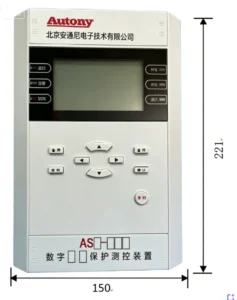
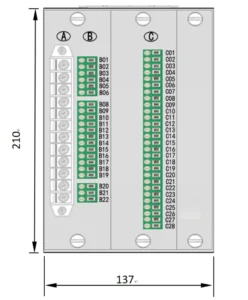
Line Protection Device — Outline and Installation Dimensions
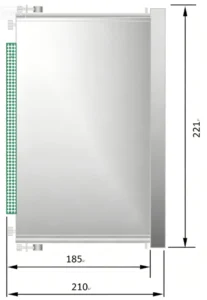
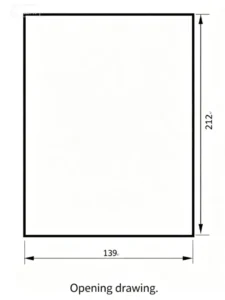
FAQ
Q:what is line level device protection?
A:Line Level Device Protection refers to protection functions and device configurations deployed at the individual line level in a power distribution/substation system.
Q:How to Select Relay Protection for Power Transmission Lines?
A:Transmission line protection devices commonly adopt line protection with overcurrent relays for most transmission line protection systems, specifically three-stage current protection. For higher voltage scenarios, transmission line protection using distance relay together with optical fiber differential protection is applied to safeguard transmission lines.
Q:What is the effect of nonlinear loads on the operation of protective devices?
A:The resulting effects include harmonic distortion, voltage stability issues, and power factor problems, among others
Related products
-
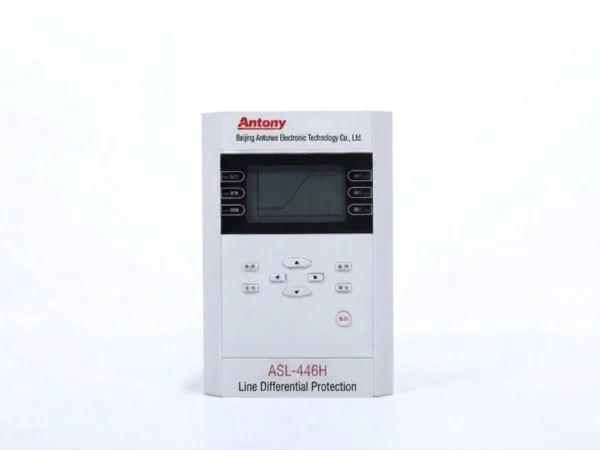
ASL-446H Differential Line Protection
Overview of differential line protection The ASL-446 digital line differential protection device is a relay used for phase fault protection of short transmission lines, and it supports differential line protection for short-circuit faults on lines of various voltage levels. Differential…
-
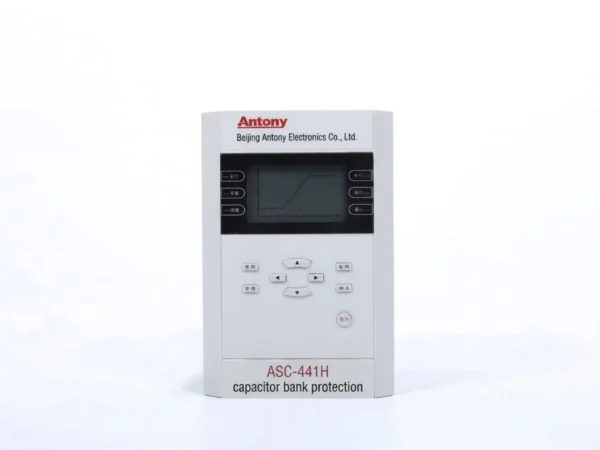
ASC-441H capacitor bank protection relay
Overview of Protective Relays In power system and substation automation, capacitor bank protection relay is a widely applied type of relay protection product, and the ASC-441H digital capacitor protection and control unit is perfectly suited for medium- and low-voltage shunt…
-

Transformer Differential Protection|87T
Product Overview transformer-differential-protection|87t and control units are suitable for substations operating at voltage levels of 110 kV and below. Typically, they are installed in a single panel alongside transformer backup protection devices, non-electrical quantity protection devices, and transformer measurement and…
-
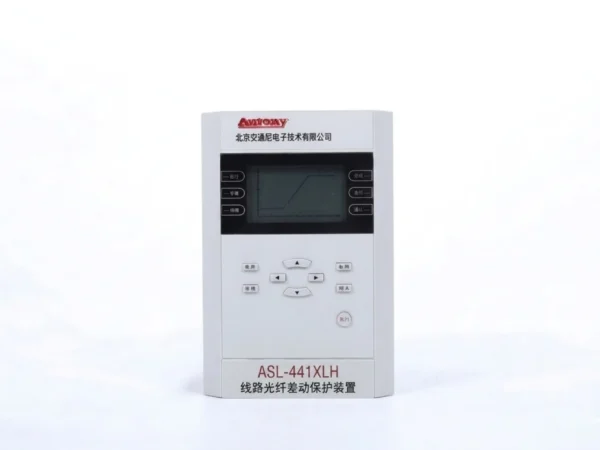
ASL-441XLH line differential protection relay
Overview As a numerical line differential protection relay and protective relay for transmission line, the line differential protection relay — line optical fiber differential protection and control unit — can be installed locally in switchgear cabinets or in a centralized…
Reviews
There are no reviews yet.